First Phone Readiness Program

The phone is coming. Help them be ready for it.

The families who struggle the most are the ones who prepared the least. This is how you prepare.

Headlamp for Families gives you a clear, guided path — one that builds real readiness and self-control in your child, keeps you out of the bad-cop role, and turns the phone conversation into something your family actually grows from.

Get early access to Headlamp for Families' first phone readiness experience.

🔒 Built from real parent interviews, surveys, and thousands of parent conversations.

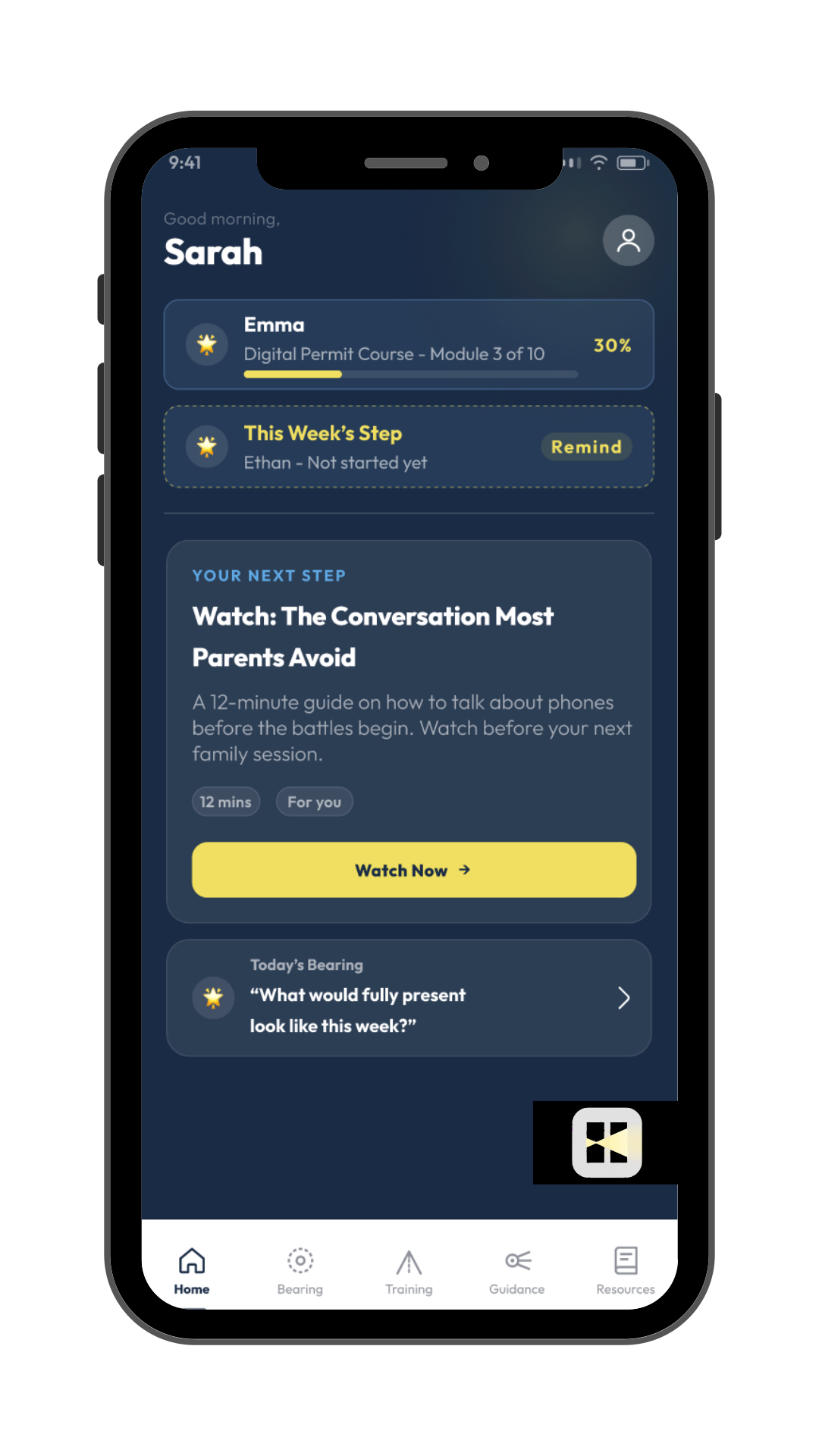
9:41WiFi 🔋
Good morning,
Sarah 👋
Digital Permit Stage
Your journey progress
Phone Readiness Course
45% complete3 of 7 done
Up next for you
Module 3: How Algorithms Work
Learn what your child's feed is optimized for — and why it matters.
⏱ 8 minReading + video
Continue My Journey →

Full roadmap

See all →
Permit Intro
Complete
Permit Course
Module 3 of 7
3
Permit Test
Unlocks after course
4
Social Media Course
Locked

"Even the best behaved kid will become glued to the screen when they get a phone. It took less than 2 days for me to absolutely regret giving the phone — they aren't the same person anymore."

Parent — after the fact

"If I were to reduce all of this to one strategic sentence: I want my kids to own their own time and attention."

Parent — describing success

"It's not mom and dad policing. How do I get him in control — taking responsibility for the right choices."

Parent interview

Is This You?

This is for parents who want
to get ahead of it.

Headlamp for Families is for the parent who can see the moment coming — and wants a real path before it arrives.

Have a child around ages 10–14 and can feel the phone conversation getting closer — whether you're ready or not
Want to stay on the same team as your child — not become the enforcer they work around and the family resents
Believe the phone conversation can actually bring you closer — if you have the right path, the right timing, and real preparation

"
The phone may be inevitable.
The fight doesn't have to be.

Most parents aren't caught in this because they don't care. They're caught in an unfair fight — with technology designed to win against underdeveloped brains, in a world with no roadmap for handing any of it over well. The problem was never you. The problem was never having a real path.

Parents don't just need
more rules. They need
a real path forward.

Most families end up choosing between two options that don't actually work:

  • Hand over the phone and hope for the best
  • Or monitor, restrict, and fight about it forever

Neither one feels like real parenting. And neither one sets your child up to handle freedom well. There's a third option — and it starts before the phone ever arrives.

The families who struggle the most are the ones who prepared the least. But the families who prepare together — before the phone arrives — end up on the same team. That's what Headlamp for Families is built to do: give your family a better path before you need a rescue from one.


The Reframe

Phones need
Driver's Ed too.

You would never hand your child the keys to a car and hope they figure it out. You'd assess readiness, teach the risks, guide the process, and gradually release responsibility as they earned it.

That's exactly what Headlamp for Families brings to the digital world — a structured, guided path that treats phone access like the serious developmental milestone it actually is.

Preparation, not just protection.

The goal isn't to control your child forever. It's to raise someone who can handle technology, relationships, and pressure well — on their own. And along the way, the phone conversation becomes something your family actually grows from together.

Your Digital Driver's Journey
🎯
Step 1
Assess Readiness
A guided experience that helps you and your child understand where they actually are — before the phone arrives.
🧠
Step 2
Teach the Risks
How algorithms, comparison, attention, and online pressure actually work on developing brains — explained for both of you.
💬
Step 3
Guide the Process
Parent-child conversations that build trust, self-awareness, and family alignment — not resentment.
🌱
Step 4
Release Responsibility
Access expands as your child demonstrates readiness. Earned, not just given. And the coaching continues.

Why Current Tools Fall Short

Most tools help you control your child's screen.
Headlamp for Families helps your child learn to control themselves.

What parents have already tried
  • ·Screen limits and timers
  • ·Parental control apps
  • ·Taking devices away
  • ·Reward systems
  • ·Screen-free days
  • ·Phone contracts
  • ·Light phones / Gabb phones
  • ·Bark, Qustodio, router controls
Why it still doesn't feel like enough

Because those tools still depend on:

  • You remembering to enforce every rule
  • You absorbing the daily conflict and pushback
  • You repeating yourself every single day
  • Your child reacting to rules, not growing
  • Everything collapsing when rules loosen
  • Zero real capability built in the child
The problem is not that you haven't tried hard enough.
Most tools were built to restrict behavior, not develop maturity. Headlamp for Families takes a different approach entirely — building real capability in your child so that as they grow, so does their ability to manage themselves. The goal isn't control forever. It's a child who is genuinely ready to handle freedom well.

How Headlamp for Families Works

Readiness before access.
Coaching after. Always together.

Three clear phases. One path that doesn't end when the phone arrives.

1
📋
Prepare Together
Parent and child work through readiness before access expands — assessments, guided conversations, and the knowledge both need to get this right.
2
📱
Access Unlocks
The phone arrives when readiness is demonstrated — not just when the pressure mounts. Access is earned together, not handed over.
3
🌱
Keep Growing
Coaching continues with weekly reflections, parent prompts, and social media readiness — building habits that last long after the phone arrives.

Not just: Can my child have a phone?
But: How do we use this moment to raise someone who is more self-aware, more prepared, and more connected to their family — not less?


What Changes

What parents really want is not perfect control.

They want a child who is becoming more capable — and a home that feels less dominated by tension and conflict.

🕊️
Less fighting
Less daily turmoil. Less constant negotiating. A home where screens don't control the family's mood.
🤝
More trust
A child growing in responsibility, not just reacting to rules. A relationship strong enough for real conversations.
🧭
More self-regulation
A child who can pause, think, and choose well — even when you're not watching over their shoulder.
📍
More readiness
A clearer path into phones and social media, instead of one big unprepared handoff with no road map.
More relief
A family rhythm that no longer revolves around screens and conflict. Relief — the word parents use most when they describe this.
"I want them to be present." "Teach them self control." "I want my kids to own their own time and attention." "Their own ability to manage healthy tech habits."

Built on Real Science · Grounded in Real Families

Our assessments aren't guesswork.
They're built by the people who study this.

Every readiness assessment and coaching prompt in Headlamp for Families is grounded in the most recent, relevant research — built by a team that spans the disciplines that matter most for this problem.

🔬
Quantitative Psychologists
Our assessments are designed and validated by quantitative psychologists who specialize in measurement science. Every question is built to accurately reflect what it claims to measure — not just what sounds good.
🧠
Adolescent Development Experts
Child development specialists shaped our understanding of what self-regulation actually looks like at different ages — and what conditions help kids build it, not just perform it.
🩺
Educators & Pediatricians
Experienced educators and practicing pediatricians provided clinical grounding — ensuring our guidance aligns with how kids actually learn and what the evidence says about screen time and adolescent brain development.
👨‍👩‍👧

And frustrated parents, too.

Because no amount of academic expertise replaces the real experience of sitting at the dinner table trying to get your kid to put the phone down. Our program was also shaped by hundreds of hours of interviews, workshops, and conversations with parents in the thick of this — who told us, in their own words, exactly what they needed.

🎙️
Parent Interviews
In-depth conversations with parents navigating this exact transition
📊
Survey Responses
Structured research capturing what parents are experiencing
🧑‍🤝‍🧑
Live Workshops
Group conversations with parents working through these questions
💬
Thousands of Comments
Real parent language from thousands of conversations

Coming to Schools & Districts

Headlamp for Families is coming to schools, too.

We're building a version of the Headlamp for Families program for schools and districts — because the phone conversation doesn't stop at the front door, and the most effective preparation happens when families and schools are working from the same playbook.

If you're a school administrator, counselor, or district leader interested in bringing Headlamp for Families to your community, we'd love to hear from you.

Get in Touch →
What the school program includes
  • Family-facing readiness curriculum aligned to school communities
  • Parent workshops and guided family sessions
  • Educator resources for classroom conversations
  • District-level rollout support
  • Assessments built by quantitative psychologists and vetted by pediatricians

Currently in pilot development. Reach out to explore bringing Headlamp for Families to your school or district.


Founding Parents

Become one of the first families
shaping Headlamp for Families

We're opening to a small group of Founding Parents first — families who want to help build a better way forward together.

We'll keep this early group small and thoughtful.

This isn't for everyone. It's for parents who want more than one more article, one more filter, or one more fight.


Common Questions

FAQ

Not primarily. Headlamp for Families is designed to help parents prepare and coach kids toward self-regulation, not just restrict access. The goal is building real capability in your child — not just managing behavior from the outside.
Headlamp for Families is especially designed for families in the first phone and early social media transition years, often around ages 10–14. This is the window where preparation matters most — before habits are set and before the daily battles become the norm.
Our assessments were designed and validated by quantitative psychologists drawing on the most recent, relevant research in adolescent development, digital behavior, and self-regulation. The full program was built with input from adolescent development experts, educators, pediatricians, and hundreds of real parents — through The YouSchool's expertise in identity formation and adolescent development.
No. Headlamp for Families is especially useful before or during the transition into phones and social media. If your child already has a phone and the dynamic feels out of control, the program addresses that too — it's never too late to build a better path.
Yes. We're developing a version of the Headlamp for Families program for schools and districts, designed to align families and schools around the same readiness framework. If you're a school or district administrator, reach out through the waitlist form and let us know.
We're currently building with early families and pilot communities. Joining the waitlist is the best way to get first access when we open the experience to families.

The phone is coming.
Help them be ready for it.

Headlamp for Families gives you a clear, guided path — one that builds real readiness and self-control in your child, keeps you out of the bad-cop role, and turns the phone conversation into something your family actually grows from.

Get invited to the first phone readiness experience from Headlamp for Families.

Not just safer kids.
Kids who are more self-aware, more prepared, and more able to handle freedom well.